Asado
What is an asado? A short guide
What an asado is, how the fire and the parrilla work, what goes with it and how a tasting-menu dinner in Puerto Iguazú differs from a backyard barbecue.
Reserve your seat at the table ↗Quick answer
An asado is both a technique and a social event: a barbecue, most closely tied to Argentina and Uruguay, cooked over open fire or embers on a grill called a parrilla by a cook called the asador. The meat is salted, cooked slowly, and shared. The Iguazú dinner is a tasting menu with beef at its centre, not a backyard asado, but it draws on the same food culture.
More than a barbecue
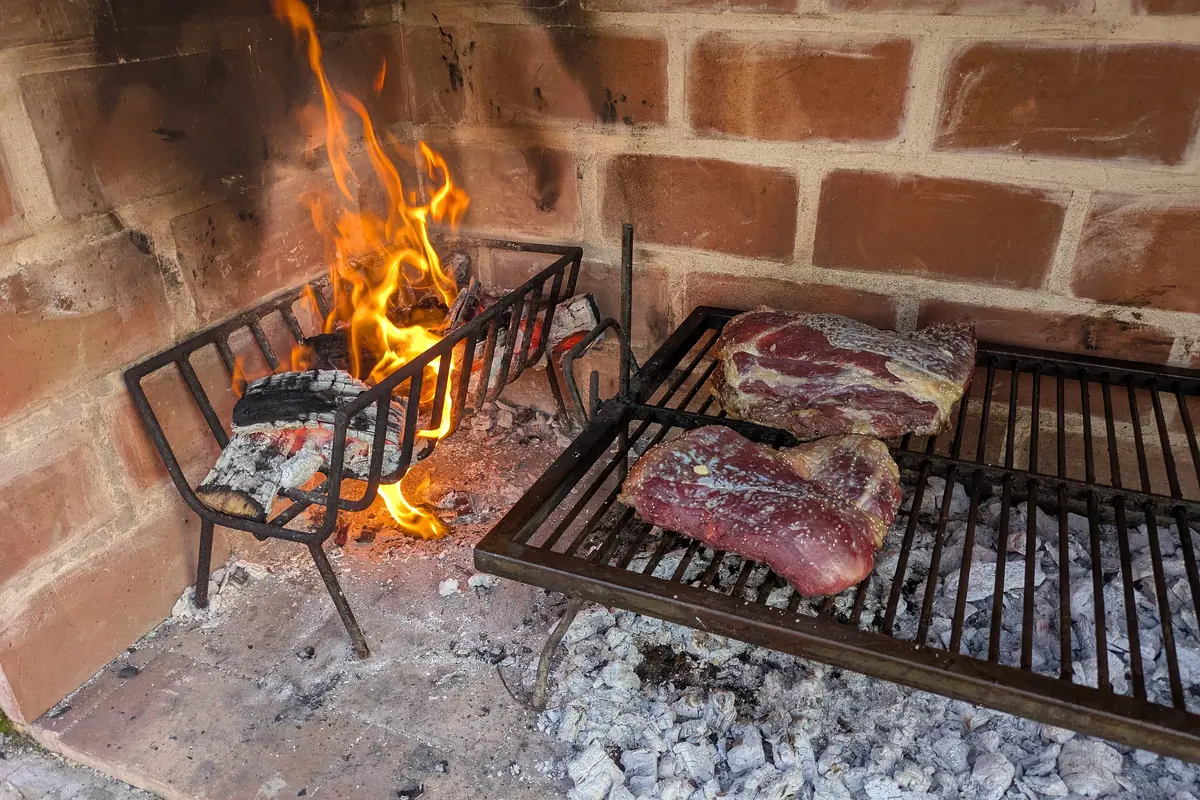
Asado is the technique and the social event of having or attending a barbecue in several South American countries, especially Argentina and Uruguay, where it is also a traditional event. It usually consists of beef, pork, chicken, chorizo and morcilla, cooked on an open fire or a grill, the parrilla. Red wine and side dishes such as salads usually accompany the meats, which are prepared by a designated cook, the asador or parrillero. Argentine cuisine is closely identified with it: beyond asado, the Wikipedia article says, no other dish more genuinely matches the national identity.
Fire and the parrilla
The asador usually begins by lighting charcoal, often from native trees such as quebracho or algarrobo, and avoids pines and eucalyptus because their resins smell strong. Cooking can be done al asador, with the animal splayed on metal crosses beside a fire, or a la parrilla, with a grill placed over the formed coals. The meat for an asado is not marinated, and the only preparation is salt, applied before or during cooking. Heat and distance are controlled so that it cooks slowly, and it usually takes around two hours. Grease from the meat is not encouraged to fall onto the coals, because the smoke it makes would flavour the meat. The asado is served on a tray, or on a brasero at the table to keep the meat warm.
The order of the table
In many asados the sausages, black pudding and offal, often with provoleta cheese, are served first while the cuts that need longer are still on the grill. Ribs come next, then cuts such as flank steak and matambre. An asado also includes bread, a simple mixed salad, or grilled vegetables. Chimichurri, a sauce of chopped parsley, dried oregano, garlic and olive oil, or salsa criolla, a sauce of tomato and onion in vinegar, are common accompaniments, traditionally used on the offal and not on the steaks. Beer, wine and soft drinks are all common, and dessert is usually fresh fruit.
Why beef
Beef is a large part of the Argentine diet because of its vast production on the country's plains. Cattle were first brought to Argentina in 1536 by Spanish conquistadors and multiplied rapidly on the Pampas. Refrigerated trains and ships in the late 19th century opened an export market, and by the early 20th century Argentina was the largest beef exporter in the world.
A meal to share
Argentine people have a reputation for their love of eating, and social gatherings are commonly centred on sharing a meal. Invitations to dinner at home are generally viewed as a symbol of friendship, warmth and integration. Sunday family lunch is considered the most significant meal of the week, and its highlights often include asado or pasta. That is the spirit the Iguazú dinner borrows when it seats strangers at a communal table and calls the evening a celebration of Argentine culture.
Variations across borders
The same idea has local forms. In Brazil asado is called churrasco, and the cooking is usually faster. In Chile the well-known version is cordero al palo, a whole lamb on a spit, and in Patagonia a whole animal on a stick set in the ground is cooked as asado al palo. Within Argentina, the asado al disco uses a worn plough disc as a grill, and the asado al horno de barro uses a clay oven, especially in the countryside. The recipe, as the article puts it, does not change, only the way of cooking.
How the dinner differs
The interactive dinner in Puerto Iguazú is a tasting menu, with courses served in a set order and matched with three Argentine wines. The ticket names tenderloin as the centrepiece, and the operator's page presents beef as one stage of six. Neither the ticket nor the operator describes the evening as an asado cooked at the table, so treat it as a hosted restaurant dinner that draws on the tradition.
Read next: Argentine Experience Iguazú, explained
Frequently asked questions
What is a parrilla?
It is the grill on which an asado is cooked, set over charcoal or embers.
Is the meat marinated?
No. The meat for an asado is not marinated; salt is applied before or during cooking.
Is the Iguazú dinner an asado?
No. It is a hosted tasting-menu dinner with beef as one stage, and it draws on asado culture without being a barbecue.
Sources