Mate
How to drink mate like an Argentine
What mate is, where it comes from, how it is prepared and passed round, and the manners that go with the gourd, ahead of the mate lesson at the dinner.
Reserve your seat at the table ↗Quick answer
Mate is a caffeine-rich herbal drink made by steeping yerba mate leaves in hot, not boiling, water and sipping it through a metal straw called a bombilla. It is the national drink of Argentina and is shared from one gourd, passed round a circle by the person serving. Take your turn, drink it all, hand it back and say thank you only when you have had enough. The dinner's final stage is a lesson in making it.
What mate is
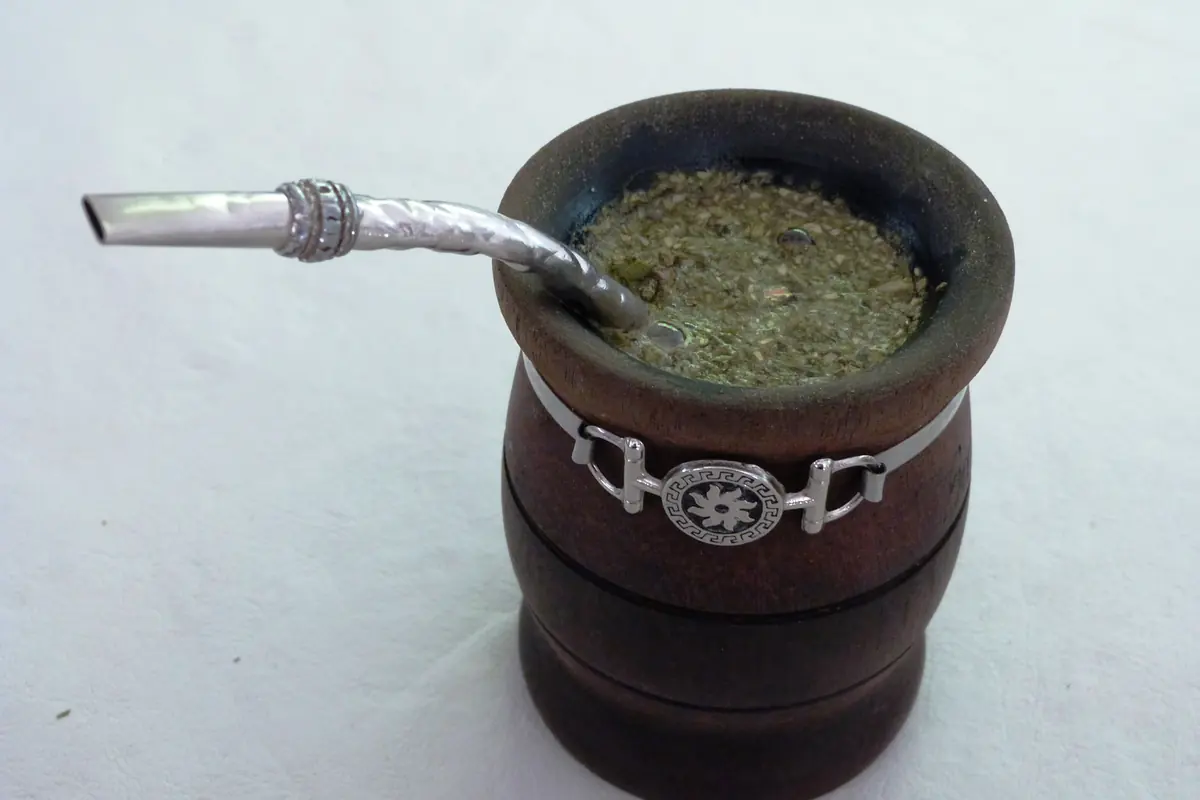
Mate is an infused herbal drink made from yerba mate, Ilex paraguariensis, a plant that originates in the Southern Cone of South America. It is made by soaking dried leaves in hot water and is traditionally served with a metal straw, the bombilla, in a container usually made from a calabash gourd. The container is also called mate, so the word names both the drink and the cup. The drink contains caffeine. Mate is the national beverage of Argentina, Paraguay and Uruguay, and it is also drunk in southern Brazil and parts of Chile.
Where it comes from
Mate was first consumed by the Guaraní, who live in what is now Paraguay, south-eastern Brazil and Argentina, and by the Tupí people in neighbouring areas. After Spanish colonisation it spread across the Southern Cone. In the mid-17th century Jesuits domesticated the plant and set up plantations in their missions in the Argentine province of Misiones, which is the province where Puerto Iguazú lies. Argentina later became the largest producer, a change that revived the economy of Misiones.
How it is prepared
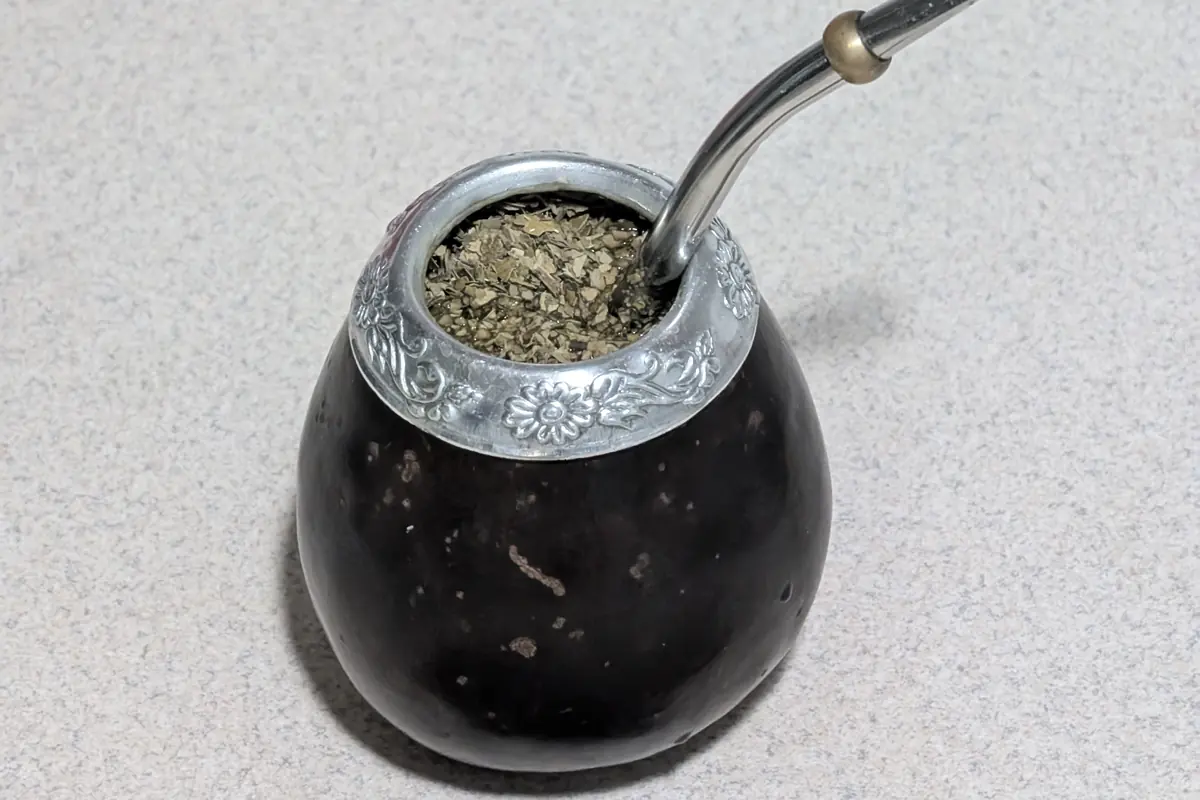
The gourd is filled one half to three-quarters of the way with yerba. The preparer covers the opening, turns it over and shakes it briefly, so the finest dust settles toward the palm and the opening. The gourd is then tilted so that the yerba piles along one side, and hot water is poured into the empty side. The water should be hot, typically 70 to 85 degrees Celsius, but not boiling. The bombilla acts as a straw and as a sieve, so the leaves stay in the gourd.
The person who serves
Mate is traditionally drunk in a social setting, such as a family gathering or with friends, and everyone uses the same gourd and straw. One person, the cebador in Spanish, takes the job of server. The cebador fills the gourd, usually drinks the first brew to make sure it is clean and of good quality, and then refills it for the next drinker. In some places passing the first brew on is considered bad manners, because it may be too cold or too strong, and the first brew is called mate del zonzo, the fool's mate.
Passing the gourd
The cebador refills the gourd and passes it to the drinker on their right. That drinker finishes it all, since there is not much liquid, and hands it back without thanking the server. A final gracias means that you have had enough. A new guest receives the next mate and then the order resumes. When no tea remains, the straw makes a loud sucking noise, and that is not considered rude. The round continues until the yerba is washed out, typically after the gourd has been filled about ten times or more.
Small manners
Only the cebador moves the bombilla or fusses with the gourd, and the cebador may take offence if someone else does, and not offer it again. If someone holds the gourd too long, the others may politely remind them. An Argentine saying, especially among young people, is no es un micrófono, it is not a microphone. Some drinkers add sugar or honey, which makes a sweet mate, instead of the sugarless bitter mate. Argentina has celebrated National Mate Day on 30 November since 2015.
Mate at the dinner
The last stage of the Iguazú dinner is a lesson in making your own mate, which the ticket describes as a traditional hot tea with its own ritual, etiquette and history. It is served with alfajores, the typical Argentine dessert. A lesson at the table is a gentle way in: you learn how the gourd is prepared and how it is passed, and the etiquette described above is the background to it.
Read next: Argentine Experience Iguazú, explained
Frequently asked questions
Is mate the same as tea?
No. Mate is made from the leaves of the yerba mate plant, not from the tea plant. It is a caffeine-rich herbal drink served through a bombilla.
Why does everyone share one gourd?
Sharing is the custom. The same gourd and straw are used by everyone, and one person serves and passes it round the circle.
When do I say thank you?
Only when you have had enough. A final gracias tells the server that you are done.
Sources