Empanadas
Argentine empanadas and the repulgue
What an empanada is, where it comes from, how each Argentine region makes its own and why the crimped edge, the repulgue, matters at the dinner.
Reserve your seat at the table ↗Quick answer
An empanada is a pastry turnover with a filling, baked or fried, and in Argentina every region has its own version. The repulgue is the method of closing it, a crimped or braided edge that seals the filling. At the Iguazú dinner you are shown how to close empanadas with different repulgue techniques, so the shape of the edge becomes part of the evening.
What an empanada is
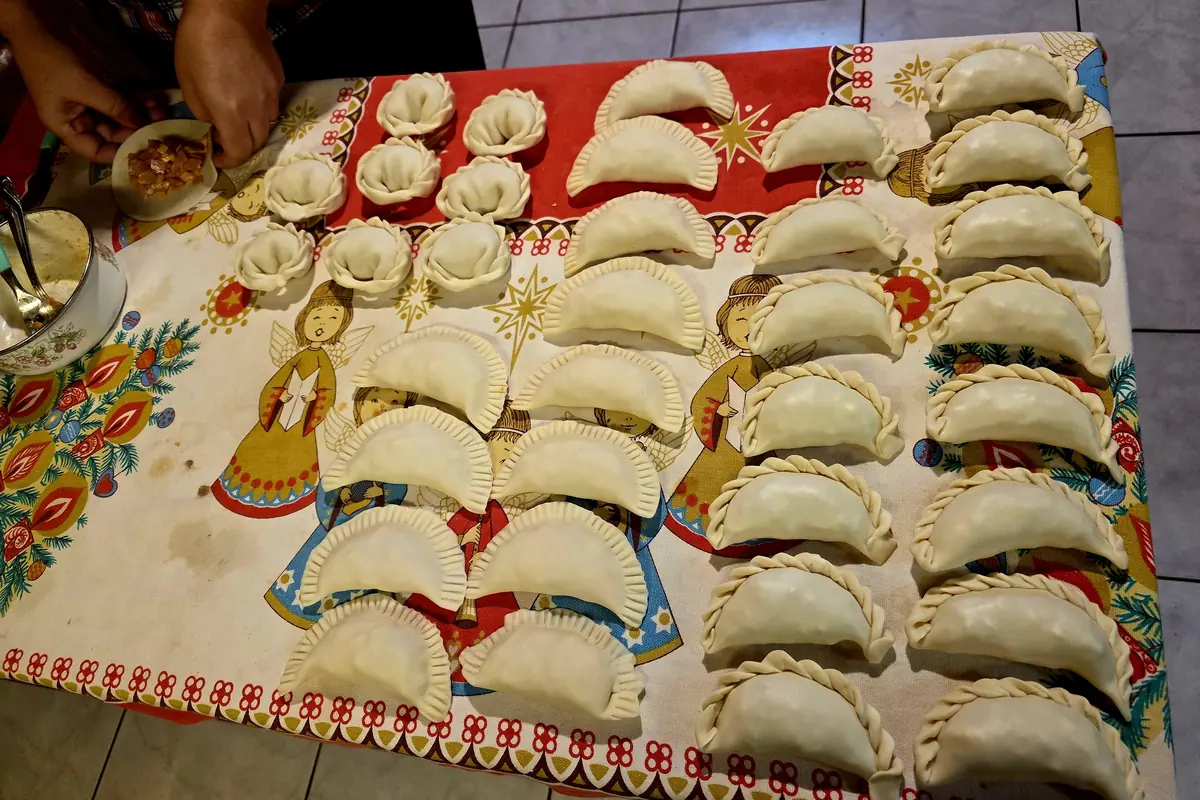
An empanada is a baked or fried turnover made by folding dough over a filling, which may be meat, cheese, tomato, corn or other ingredients. The name comes from the Spanish empanar, to bread, meaning wrapped or coated in bread. Empanadas are found in Spain, Portugal, other Southern European countries, North and West Africa, South Asia, Latin America and the Philippines. In Argentina they are often served at parties and festivals, as a starter or a main course, and shops specialise in freshly made ones.
An old idea
The origin of empanadas is not known with certainty, but they are thought to have originated in 7th-century Galicia, in north-western Spain. An empanada is mentioned in the Cantigas de Santa Maria, from about 1282, and a cookbook published in Catalan in 1520, the Llibre del Coch, mentions empanadas filled with seafood. Medieval Jewish texts of the same period mention inpanada and panada as bread products with fat, meat or fish inside. Today the name covers a wide range of shapes and fillings, from Spain and Portugal to Latin America and the Philippines.
One name, many regions
Every region of Argentina has its own characteristic empanada. Those of Salta, called salteñas, are small, juicy and spicy, and are also popular in neighbouring Bolivia, while those of Mendoza are large and include olives and garlic. San Juan's have more onion, which makes them juicier and slightly sweet. In the Patagonian cordillera they are made with lamb, and on the coast with seafood. In Buenos Aires the Creole empanada is so important that it has been declared a Cultural Heritage of Food and Gastronomy by the Argentine Ministry of Culture. A dinner that opens with a hands-on empanada is therefore starting with a regional signature.
What the repulgue is
The repulgue is the method of closing the empanada. The word describes the crimped, braided or pressed edge that seals the filling inside the dough, and different regions and families favour different patterns. In Jujuy, according to Wikipedia, the filling is called recado and the closing is called simbado. The Jujuy example shows that the closing style is regional, not universal. For a guest at the table, it is a small craft that is satisfying to get right.
Empanadas worth knowing
Some regional versions have stories of their own. Tucumán is known for the creole empanada, and an annual National Empanada festival is held in Famaillá. In Córdoba, a version called the Pastel Federal became famous for a filling that included pears boiled in wine with cloves, and today it is traditionally sprinkled with sugar. In the Litoral, where immigrants from many places settled, river fish such as surubí or dorado fill some empanadas. The point for a visitor is simple: ask where an empanada comes from, and the answer will tell you about the region.
Folding one at the dinner
At the Iguazú dinner you sit in an apron and chef hat while a host shows you how to close traditional empanadas using different repulgue techniques. The operator's menu calls this stage hands-on time and says you learn to craft Argentina's iconic empanadas by hand, just like locals do. It is a short activity inside a long meal, and the host shows each technique.
Baked or fried
Argentine empanadas are both baked and fried, and the choice depends on the region, the family and the filling. Some Argentine versions, such as those of Famaillá in Tucumán, are fried in good fat, and empanadas in general are cooked either way. The dinner's empanada lesson concentrates on shaping, and the menu does not publish how the finished pastry is cooked, so treat the cooking method as something the host will explain. Either way, the technique you learn is the same one used in homes across the country.
Read next: Argentine Experience Iguazú, explained
Frequently asked questions
What does repulgue mean?
It is the method of closing an empanada, the crimped or braided edge that seals the filling inside the dough.
Are empanadas baked or fried?
Both. Argentine empanadas are baked or fried depending on the region, the family and the filling.
Do I need cooking skills for the lesson?
The host shows how to close traditional empanadas using different repulgue techniques, and the operator describes the evening as a dining event, not a typical cooking class.
Sources