Wine
Argentine Malbec, explained
How Malbec became Argentina's signature red, where it grows, why Mendoza matters and what to expect when three Argentine wines arrive with dinner.
Reserve your seat at the table ↗Quick answer
Malbec is a dark red grape that arrived in Argentina in the mid-19th century and is now the most widely planted red variety in the country, centred on Mendoza. Argentine Malbec is known for deep colour, intense fruit and a velvety texture. The Iguazú dinner opens with a Malbec-based cocktail and pairs its courses with three different Argentine wines, so the grape appears more than once.
A grape from France, a wine from Argentina
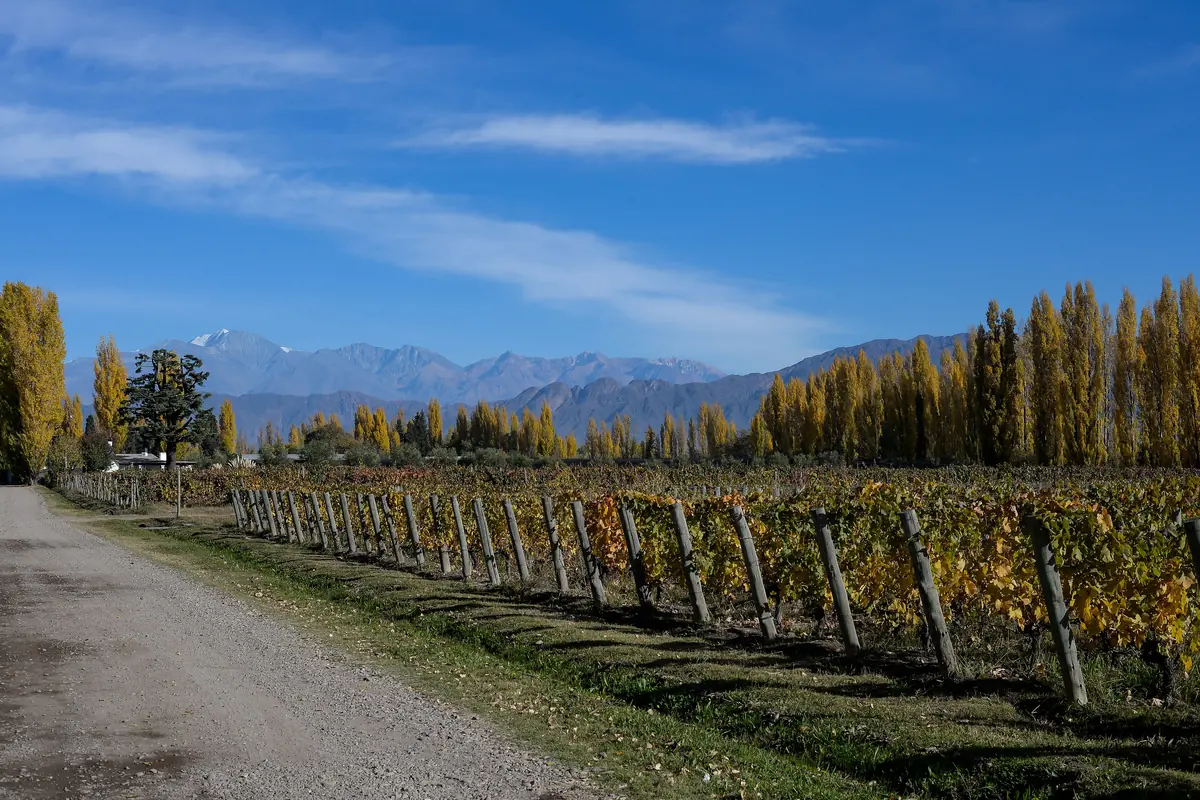
Malbec is a purple grape used to make red wine, and it is one of the six grapes allowed in red Bordeaux. It became less popular in Bordeaux after 1956, when frost killed off 75 percent of the crop. In France its plantings are now found mainly in Cahors. In Argentina it surged and became a national variety of a sort, uniquely identified with Argentine wine. It was first introduced in the mid-19th century, when the provincial governor Domingo Faustino Sarmiento instructed a French agronomist, Pouget, to bring grapevine cuttings from France. Among the vines he brought were the first Malbec vines planted in the country.
Today's most planted red
During the economic turmoil of the 20th century, some Malbec was pulled out to make way for varieties that produced jug wine. The grape was rediscovered in the late 20th century, when the industry turned to premium wine for export. Malbec is today the most widely planted red grape variety in Argentina, and the Mendoza region is its leading producer. Plantings are also found in La Rioja, Salta, San Juan, Catamarca, Río Negro, Neuquén, Chubut and Buenos Aires province.
What it tastes like
Argentine Malbec is characterised by deep colour and intense fruity flavours with a velvety texture. It lacks the tannic structure of French Malbec and is more plush in texture, while showing similar ageing potential. Argentine clusters are different from French ones, with smaller berries in tighter, smaller clusters, which suggests that the cuttings brought over were a distinct clone. That is why Argentine Malbec reads as plusher in the glass than its French counterpart.
Why Mendoza and altitude
The province of Mendoza produces more than 60 percent of Argentine wine. Argentina's most highly rated Malbecs come from Mendoza's high-altitude regions of Luján de Cuyo and the Uco Valley, in the foothills of the Andes between 800 and 1,500 metres. The altitude and the low humidity mean vineyards rarely face the insects, fungi and molds that affect vineyards elsewhere, which allows cultivation with little or no pesticide. Nicolás Catena Zapata, widely credited with raising the status of Argentine Malbec, planted a vineyard at almost 1,500 metres in 1994, the first at that height.
Beyond Malbec
Argentina is the fifth largest wine producer in the world. Torrontés is another typically Argentine grape, mostly found in La Rioja, San Juan and Salta, and it makes aromatic white wines. Italian immigrants brought vines they called Bonarda, and international varieties such as Cabernet Sauvignon, Syrah and Chardonnay are also planted. In November 2010 the Argentine government declared wine the national liquor. The ticket does not name the three wines in the dinner's pairing, so this guide does not either.
How Argentine wine grew
Argentine wine has its roots in colonial Spain and in the later Spanish and Italian immigration, which made it an everyday drink at home. Winemaking in the west had to wait for transport: the completion of the railway between Mendoza and Buenos Aires in 1885 eased the long trip by wagon and opened the main market. Until the early 1990s Argentina produced more wine than any country outside Europe, though most was for home use. Exports began in the 1990s, and Argentina is now the largest wine exporter in South America.
Wine at the dinner
The Iguazú dinner starts with a cocktail made on a base of Malbec wine, and the ticket then lists a beer or wine pairing with three different wines from Argentina. The operator's page describes them as boutique Argentine wines. The operator says each plate is paired with one of three Argentine wines. Wines may change, so no label is promised here. If you prefer not to drink alcohol, non-alcoholic drinks are included, and the mate lesson at the end is alcohol-free.
Read next: Argentine Experience Iguazú, explained
Frequently asked questions
Is Malbec Argentine?
The grape came from France, but Argentina turned it into a national variety, and it is now the country's most widely planted red grape.
Where does Argentine Malbec grow?
The Mendoza region is the leading producer, and plantings are found in many other provinces, including Salta and San Juan.
Are the dinner's wines named?
No. The ticket lists three different Argentine wines in the pairing without naming them.
Sources